Flogging tradition in Irish schools
The Greatest Beer Run Ever: A Memoir of Friendship, Loyalty, and WarCorporal punishment in Irish schools was not an exceptional response to serious misconduct in John McGahern’s recollection, but a routine feature of schooling, meted out for mistakes, inattention, and minor breaches of discipline. His account sets the gentleness of his mother’s teaching against the canes at Augharan School, and traces the wider authority that allowed such violence to pass largely without challenge.
Schools and the expectation of discipline
In the remote schools of the Irish National School system, discipline was bound up with official inspection. McGahern’s mother disliked physical punishment at a time when savage beatings were commonplace, yet inspectors criticized her classes for lacking strict discipline. The tension was material as well as pedagogical: if pupils were judged insufficiently proficient in Irish, their teacher could lose salary increments. Preparing rare delicacies such as ham and tomatoes for an inspector’s lunch the night before his visit, she tried to conceal her anxiety and put a good face on the pressures surrounding her work.
A fall in pupil numbers at Lisacarn School, government cutbacks, and the absence of new teaching appointments placed McGahern’s mother on the teacher panel, from which vacancies had to be filled. Her transfer to Beaghmore School brought the family to a house near Cloone, while McGahern was sent to the nearby Augharan School. His father supported the separation from his mother, seeing the school’s harshness as a way to toughen him. The move therefore placed him in a different local school environment just as his mother’s gentler example became less accessible to him.
Canes, switches, and daily punishment
Mrs McCann, the junior teacher at Augharan School, kept bright yellow bamboo canes in a cupboard. When they splintered, she cut ash, sally, and hazel switches from the hedges and continued using them throughout the day. Children could be struck for oral or written errors, inattention, or the slightest indiscipline; the worst punishments took place in the corridor, out of sight of the classroom. The instruments changed, but the reach of punishment did not: a failed answer or wandering attention could bring a blow.
McGahern did not claim that he was beaten more than the other children. What made the experience a descent into terror for him was the contrast with his mother’s gentleness and his lack of previous exposure to such treatment. He tried fiercely to leave Augharan School and follow his mother and the twins to Beaghmore, but the decision was not his to change. His private prayer that a German plane might mistakenly drop a bomb on the school records the desperation of a child who saw no ordinary route of escape.
A normalized violence
McGahern doubted that Mrs McCann was unusually violent for her time. Recalling their own schooling, men of his generation described hands so black and swollen after beatings that they could not hold tools in the evenings, and remembered blows across their legs, arms, and shoulders. Their question was how anyone learned under such conditions. These memories make punishment visible not as an isolated incident but as a repeated bodily cost that accompanied children to and from school.
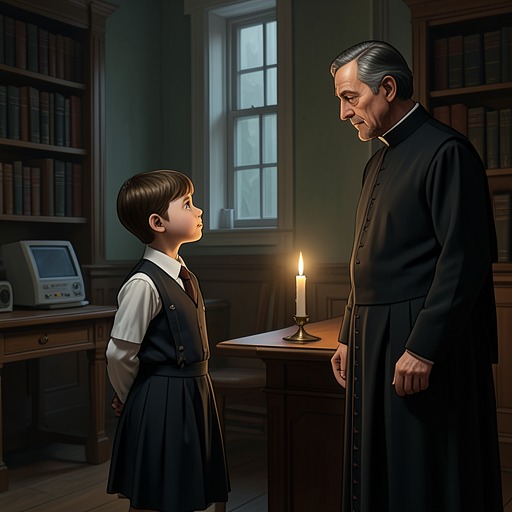
The institution’s tolerance of physical punishment helped make it difficult to recognize its excesses: once licensed, McGahern observes, violence could grow monstrous while scarcely being noticed. Parents could complain at the school, approach a priest, or threaten legal action, but such recourse was rare. The same hierarchy that governed the school extended, in his account, from God the Father downward and was difficult to question; violence was also common in homes. He connects that wider order to a doctrine that treated the soul as eternal and belonging to God while casting the body as unclean, vulnerable to sin and disease, and destined to die. He does not suggest that Mrs McCann consciously acted from this theology, but places school beatings within a culture that gave authority broad license over children’s bodies.
The attempted appeal and its reversal
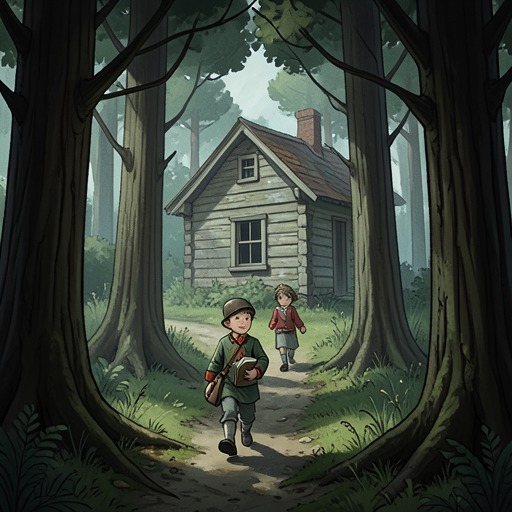
On the road to Augharan School, McGahern began looking at wild flowers, recalling how he had once named them with his mother on the lane to Lisacarn. He also used the walk to delay arriving at school. Hoping to win Mrs McCann’s favor, he pushed through nettles and briars in the garden of an abandoned cottage and gathered purple thistles, which he thought beautiful as roses. His hands and legs were bloodied by the effort.
Mrs McCann first received the flowers in amazement, apparently not recognizing them as thistles. Once she felt their thorns and understood what they were, she grew angry, ordered him to throw them away, and treated the gift as mockery of her and the school. McGahern returned to class humiliated, aware that his attempt to ingratiate himself had worsened his position; his classmates’ knowing smiles made the embarrassment public. The episode shows the distance between the child’s appeal and the teacher’s authority: even a painstaking gesture of affection could be interpreted as defiance, leaving him with no protection from the school’s established power.